
France ended its summer with three record-breaking heatwaves, totaling a record 53 days in unprecedented hot conditions. During its peak in July, Paris reached blistering heats comparable to Dubai, while some of France’s wine-country regions hit nearly 112°F. Climate change has in recent years afflicted France that has grown accustomed to the stable, temperate climates that allows for longer, slower grape-ripening seasons. More importantly, its human toll has magnified France’s imbalanced handling of climate change and growing tension between its carbon neutral aspirations while also protecting its population from the immediate harmful impact of rising temperatures. Severe heatwaves resulted in over 5,700 excess deaths between June 17 – July 2 alone. Outdated infrastructure, including rigid regulations restricting air condition units, and structures favoring the retention of heat for cold winters, have left France unprepared for the onslaught of climate change it is experiencing, driving up heat-related deaths.
While the impact of climate change on France’s wine production and people have been well documented, what is less understood is how it is rapidly changing another source of national pride and heritage: cheese.
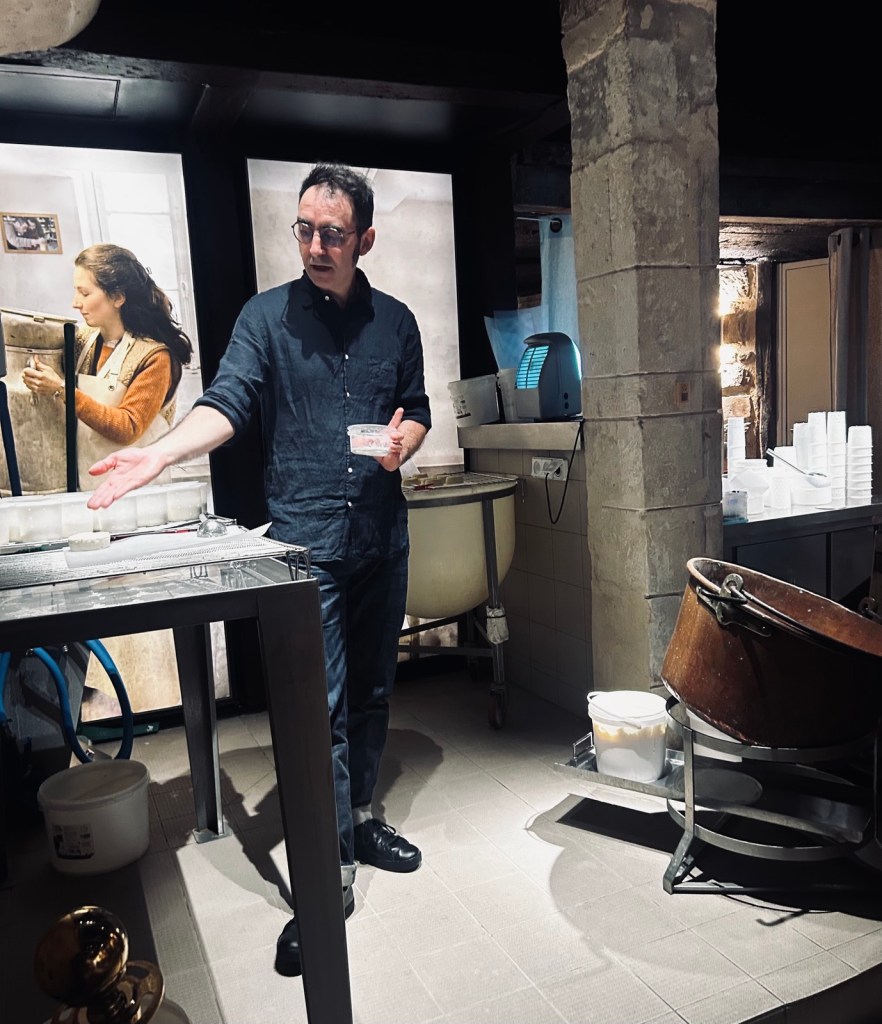
During a visit to Paris’ Museé Vivant du Fromage, director and cheese expert Guillaume Gaubert stressed the consequences of rising global temperatures on the terroir of cheese, or what makes French cheese –well, French. Terroir, a French term, describes the unique influence that local environments and farming practices have on the flavor of different types of wine and cheese. From the soil, climate, landscape, dairy source, feed to human touch, terroir symbolizes the relationship between the land, labor, and food. Uniqueness trumps uniformity and consistency. Embracing terroir equates to rejecting mass production brought on by industrialization, which strips the human element and heritage behind artisanal cheese. This homogenization sacrifices the diversity and distinctive flavor that terroir creates.
France’s Appellation d’Origine Contrôlée (AOC) system, which later became the model for the European Appellation d’Origine Protégée (AOP),1 or “protected designation of origin,” was established to combat fraud and misuse of prestigious geographic names, and protect the terroir and traditional production methods of regional foods and wines, allowing us to continue enjoying authentic camembert from Normandy, the Jura’s Comté, and Roquefort from Occitania, among many others.
The prestigious AOP designation serves as a marker of authenticity, superior quality, and generally allows cheesemakers to sell their products at a higher price. However, producers must meet strict criteria to obtain it. For each type of cheese (and in France, there is upwards of 1,200 of them depending on who you ask) the AOP governs everything from the breeds of cow or goat, what they are fed, the amount of time they must spend grazing on pastures, the methods for producing the cheese and where, how long they are aged, and so on.2 For example, producers of the beloved Comté, the largest of the protected cheese in France, must meet 37 pages worth of requirements to carry the AOP designation.
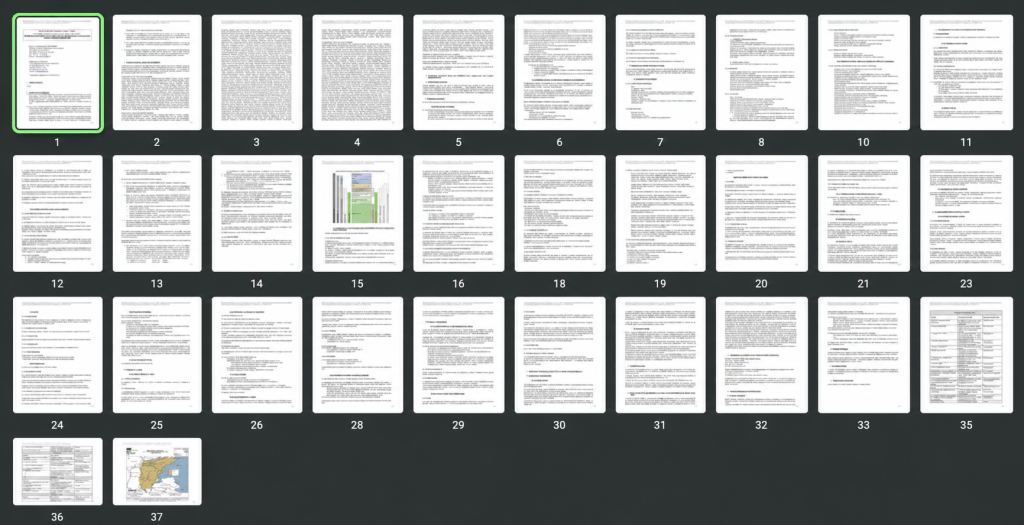
While meeting these strict requirements may burden artisanal cheesemakers, AOP has helped preserve the quality, diversity, and distinctive characteristics of French cheese and reinforces the connection between food, land, and the people behind them. It also allows them to sell it at a price point where they can maintain their operations and not be priced out by mass-produced cheap imitations.
Gaubert was enthusiastic in describing the value of terroir during the tour. Yet, he appeared dejected over its future. Mass production and the decline of new artisanal cheesemakers continue to pose problems, but it’s climate change that threatens to unravel the very notion of terroir.
If France’s diverse variations of historical and protected cheese derives its flavor from its immediate ecological environment and traditional cheesemaking practices, what happens when those factors change? Higher temperatures results in dryer pastures with less grass for cows to graze on. Cows also can’t graze for as long as they should because of the sweltering heat. This all culminates in less milk that cows are able to produce. Combined with shorter maturation processes, the outcome is lower quality cheese. Even in France’s wetter regions such as Normandy that is known for its soft and creamy camembert, climate change is creating damper and more humid environments that have created waterlogged pastures inconducive for grazing and the spread of new fungi – and not the good kind.
Farmers have tried to adapt to the new realities of climate change by increasing cattle’s hay consumption to compensate for the shorter grazing time and grass available. However, the food that a cow eats has a significant impact on the texture and taste of cheese; cheeses made with milk from cows that are primarily fed a grass diet are more flavorful and have more nutrients. Conversely, feed that relies more on hay or corn can flatten cheeses’ complex tastes. This alone helps us understand why French cheese is typically held in higher esteem than American cheese, which has been less resilient to the onslaught of mass production. In lieu of an AOP system in the U.S., even traditional American cheesemakers have been compelled to reduce grass in the feed for cattle in favor of cheaper alternatives to reduce costs and compete with major dairies.
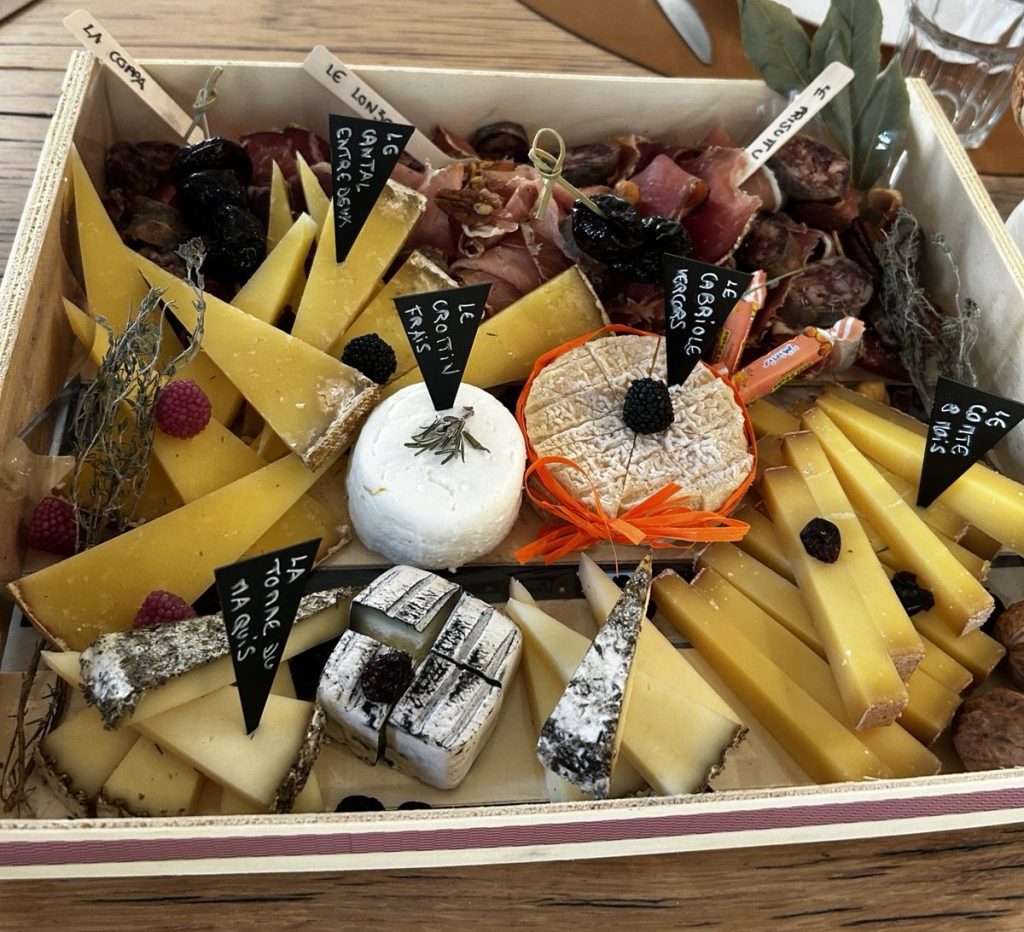
Beyond potentially compromising taste, these adaptations come with another risk for French cheesemakers: falling out of compliance with strict AOP requirements. The producers of the nutty, semi-hard Salers cheese were confronted with this issue in 2022 when extreme heatwaves led to debilitating droughts in the Auvergne-Rhône-Alpes region of south-central France. The resulting dryer pastures meant less grass for cows to feed on, hindering Salers producers ability to meet the 75% diet requirement for the AOP. For the first time in its 2,000 year history, Salers production halted that summer when cheesemakers switched to the lower-value, milder Cantal cheese with less restrictions – and significantly less profit.
Heatwaves have afflicted Salers nearly every year since then. This summer, droughts from record-breaking temperatures forced over 75% of Salers’ 80 cheesemakers to yet again stop their production. Salers is not the only AOP cheese at risk from climate cheese, though it may be among the hardest hit. Comté, brie de melun, abondance, munster, camembert, roquefort – to name some of France’s more internationally renowned artisanal cheeses– have all been affected to varying degrees.
After recognizing the “historical” droughts this summer, the Institut National de l’Origine et de la Qualité (INAO), the body governing the AOP, announced “temporary modifications” to the rigid requirements in light of extraneous events affecting cheese producers. This represented a major capitulation by the INAO, who for years resisted calls for flexibility in compliance to AOP standards, albeit with some minor occasional exceptions. So far, adjustments, from reducing the minimum grazing period, higher supplementary feed allowance, and outsourcing of alternative feed, have been formally approved for numerous types of cheese. Additional modifications for several others, including Salers, are anticipated.
Flexibility in the rules will offer some reprieve for France’s artisanal cheesemakers. While this will allow us to continue enjoying some of our favorite cheeses, they may not taste the same. As previously mentioned, the very purpose of the AOP is to preserve their traditional cheesemaking practices and terroir of cheese that imbue distinctive tastes and embodies the unique land, labor, and climate.
Some artisanal cheesemakers are confronting the new realities of climate change while striving to meet the existing AOP requirements – either out of necessity where INAO has refused to budge, or out of a genuine desire to preserve what makes a brie a brie, a camembert a camembert, and a comté a comté. From moving up hay harvest to wetter seasons, refrigerating milk more quickly after milking, retrofitting aging spaces with stronger temperature control, cheesemakers are adapting to these new conditions. But these changes come at a price that is out of reach for most, particularly in the face of increasing regulations, rising fuel costs, inflation, among other challenges ubiquitous for farmers around the world. Unable to keep up with the mounting pressures, some have given up on maintaining their AOP altogether.
Cheese is not the only beloved French product under threat. The impact of climate change on the supply of champagne has been well established, while its impact on croissants, mustard, among other French foodstuffs is beginning to emerge. Like artisanal cheesemakers, these makers will also need to adapt their traditional practices to the hotter, less predictable conditions. They will also face the same tension between changing to survive the new climate realities while preserving centuries-old practices that honor their heritage and give these very goods their distinctive, regional flavors – their terroir.
Passionate artisans like Gaubert remind us of what is at risk to the heritage and rich diversity of France’s traditional cheeses. Perhaps cheesemaking practices can eventually adapt without losing what makes them distinctive. With current trends in climate change, the likelier reality is that we will need to accept that our favorite French cheeses may not always taste as it once did.
Further Reading
- Rebecca Ferlotti, “How Climate Change Is Affecting the Cheese Industry,” Quality Assurance & Food Safety, 2025.
https://www.qualityassurancemag.com/article/how-climate-change-is-affecting-the-cheese-industry/ - Alison Hird, “Champagne, Comté and Croissants in the Crossfire of Climate Change, Experts Warn,” RFI, 2026.
https://www.rfi.fr/en/france/20260712-champagne-comt%C3%A9-and-croissants-in-the-crossfire-of-climate-change-experts-warn - Katherine Kornei, “Cheese in the Time of Industrial Farming and Climate Change,” Eos, 2025. https://eos.org/articles/cheese-in-the-time-of-industrial-farming-and-climate-change
- Emily Monaco, “Is the Future of French Cheese at Stake?” BBC, 2024.
https://www.bbc.com/travel/article/20241101-is-the-future-of-french-cheese-at-stake - Catherine Porter, “A Climate Change Quandary: What to Do About the Cheese?” The New York Times, 2023.
https://www.nytimes.com/2023/10/29/world/europe/french-cheese-climate-change.html - Meghie Rodrigues, “Climate Change Is Coming for Your Cheese,” Science News, 2025.
https://www.sciencenews.org/article/climate-change-cheese-cows-diet - Kelsey Vlamis, “Cheesemakers Are Pushing Back Against France’s Strict Rules as Some Say Climate Change Is Making It Impossible to Meet the Traditional Standards,” Business Insider, 2023.
https://www.businessinsider.com/french-cheesemakers-struggle-to-meet-standards-due-to-climate-change-2023-11 - Matthew Wills, “Cheesy Terroir-ism: The ABCs of AOCs,” JSTOR Daily, 2025.
https://daily.jstor.org/cheesy-terroir-ism-the-abcs-of-aocs/ - “Climate Change and Cheese Quality: The Pivotal Role of Grass Feeding,” Phys.org, 2025.
https://phys.org/news/2025-05-climate-cheese-quality-pivotal-role.html - “French Cheese Flavors Are at Risk as Climate Change Takes a Toll,” CNN, 2026.
https://www.cnn.com/2026/09/06/travel/french-cheese-flavors-climate-change-risk
- France’s AOC system became the model for the European AOP system, which is the designation consumers now see on many French products, hence why it is more common to refer to the AOP, as this post does. ↩︎
- See Institut National de l’Origine et de la Qualité (INAO), “AOP: Appellation d’Origine Protégée,” https://inao.gouv.fr/en/aop-appellation-origine-protegee; Roger Cohen, “The French Cheese That May Disappear,” The New York Times, October 29, 2023, https://www.nytimes.com/2023/10/29/world/europe/french-cheese-climate-change.html; and Matthew Wills, “Cheesy Terroir-ism: The ABCs of AOCs,” JSTOR Daily, March 4, 2025, https://daily.jstor.org/cheesy-terroir-ism-the-abcs-of-aocs/ ↩︎






Leave a comment